Executive Summary & Policy Architecture
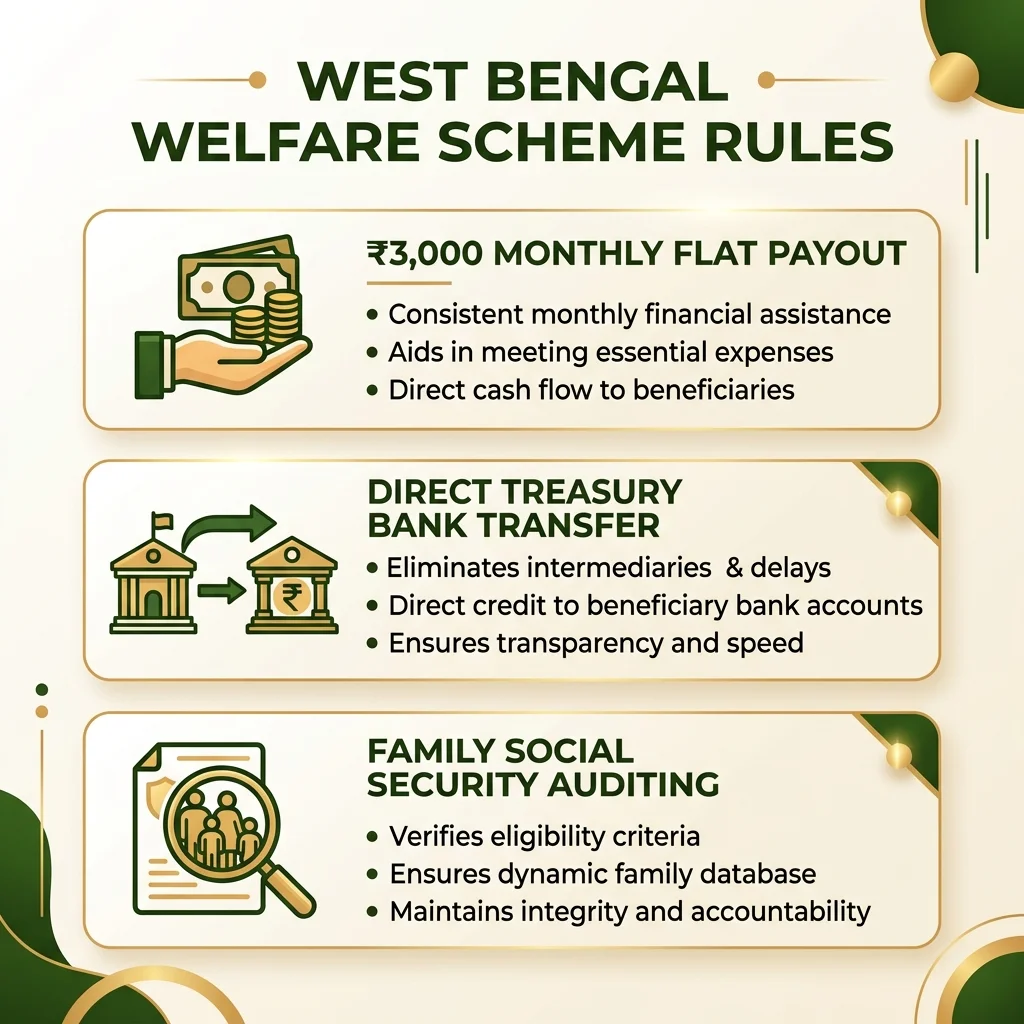
The Annapurna Bhandar Scheme 2026 is established to provide continuous, predictable financial empowerment to female heads of family in West Bengal. By increasing the monthly transfer amount to ₹3,000 per month, the scheme seeks to elevate household purchasing power, strengthen nutritional health, and foster female financial independence across urban municipalities and rural Gram Panchayats.
Direct Benefit Transfer (DBT) & Aadhaar Vault
Unlike legacy cash disbursement setups, Annapurna Bhandar relies on end-to-end digital pipelines. Beneficiaries must possess an active savings account in a scheduled commercial bank, regional rural bank (such as Bangiya Gramin Vikash Bank, Paschim Banga Gramin Bank, or Uttarbanga Kshetriya Gramin Bank), or post office. The bank account must be mapped on the National Payments Corporation of India (NPCI) Aadhaar Payment Bridge System (APBS).
West Bengal Social Registry Integration
A cornerstone of the 2026 administrative rollout is the integration with the unified WB Social Registry portal. This central data warehouse harmonizes data points across Swasthya Sathi health cards, digital ration cards (Khadya Sathi), and caste certification databases to prevent duplicate registrations and guarantee immediate approvals for authentic citizens.
State Budgetary Allocation & Fiscal Framework
The Government of West Bengal has earmarked an annualized outlay exceeding ₹25,000 Crore within the state social welfare budget to fund Annapurna Bhandar disbursements. Transferred funds originate from the consolidated revenue fund of the state treasury and are deposited directly into Reserve Bank of India (RBI) electronic clearing queues, eliminating intermediary bureaucratic tiers.
Beneficiary Entitlement & Citizen Bill of Rights
- Right to Free Enrollment: No government office, Duare Sarkar counter, or representative may solicit application charges or documentation fees.
- Right to Zero Deduction: Commercial and cooperative banks are legally barred from levying minimum balance penalties, loan recovery deductions, or SMS surcharges on Annapurna Bhandar DBT receipts.
- Right to Transparency & Status Tracking: Every registered applicant is entitled to receive an official stamped 16-digit Application ID counterfoil for real-time tracking.
- Right to Statutory Grievance Appeal: If an application is rejected without valid justification, citizens have the legal right to file an appeal before the Sub-Divisional Officer (SDO) under Section 7 within 30 days.